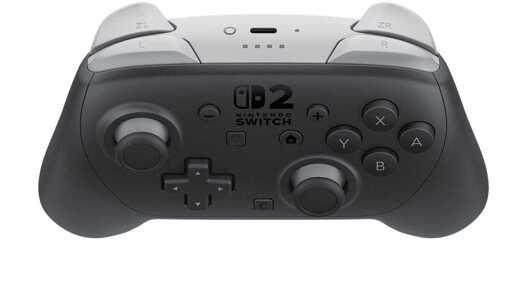
Two gamers have filed a class action lawsuit against Nintendo, alleging that the company will be unjustly enriching itself with any refund it secures from the U.S. government over widespread tariffs last year that, among other things, hiked the prices of Nintendo hardware and accessories.
“Unless restrained by this Court, Nintendo stands to recover the same tariff payments twice—once from consumers through higher prices and again from the federal government through tariff refunds, including interest paid by the government on those funds,” the suit states.
Like everything else Trump does this too was a grift by him to funnel money to the rich. He should be a part of this law suit.
He’s criminally protected from any official acts while in office, remember?
(A Supreme Court decision made during Biden’s term, it should be noted - he was also criminally protected from any consequences of his official acts as president, and they specifically gave the example of a president using Seal Team Six to assassinate their political rivals. Biden didn’t even try using that power against Trump in any way. Assassination was probably off the table lmao but he could’ve done extrajudicial surveillance or such. He didn’t, because they’re all owned by the same oligarchs and Zionazis.)
And a civil lawsuit would be paid by… the taxpayers.
You don’t get to win when the other side makes the rules. You have to stop playing the game, or get as close as you can.
He’s not protected from things moving towards him at terminal velocity. That’s the other solution.
Nice try FBI handler
I think it’s presumptuous to assume that the increase in prices that just happened to be identical to the tarrifs had anything to do with the tarrifs.
Nintendo: you know what? Fuck you. Our prices just went up for you. Games are $120 now. Fuck you, you’ll still buy our pokemon slop we spent 0 effort making. Mario? Yep, $120, but now when he jumps he says “fucka youuuu!” You’ll still buy it, because Mario.
They can say that in the future but as far as this suit goes, didn’t they already say, “Don’t blame us, the prices are going up because of tariffs”?
You reminded me of a b rated movie about some old coots in NY. There’s a kid who says that to anything anyone says to him.
I’ve been ootl on Pokemon since y/x, and even was barely paying attention before someone else bought it for me. But the shit I saw when sword shield(? First switch title) was wild. They really were just phoning it in, and people still bought everything else they dropped! The only reason I got a switch was for prime 4, and likely won’t be getting a switch 2. Sucks watching my nostalgia be abused in real time.
You can still enjoy the games you are nostalgic for with emulators.
I love how nintendo are switching our youths back towards old school tactics. Emulators and piracy are having their renaissance.
Never left for me. 😎
I got tired of the new games being shit and/or not done when. I think last game I bought new was No Man’s Sky (yes I know, its decent now, I still play it sometimes), after that disappointment I just gave up. I haven’t been paying attention on whats coming, whats the newest big game… I just play emulators. I play the games that I wanted to play when I was a kid, but couldn’t. My gaming journey started with Amiga 500, then I got a NES, after that a Game Gear, then a Play Station 1. So I’ve been gaming a lot of SNES stuff lately, I downloaded a bunch of Atari titles. Sega games are next on the list.
Theres so much to play, I will die before I run out of stuff. I think I’ll never buy a new game ever again.
And I do sometimes, some community made ones and randomizers on occasion. It would just be nice to have something to look forward to when the used market becomes more affordable.
Friendly reminder that the Boston Tea Party was about tariffs. We know what works.
not sure if this also works for self-imposed tarrifs.
I would eat the cost of gas to watch people tweeting their Switch 2’s into the harbor. Boston or Baltimore this time around?
No no no. You don’t yeet devices into the harbor that have been paid for already. You yeet unsold devices.
Exactly. The tea was sitting in the harbor because it hadn’t been sold yet. The toilet paper warehouse fire was analogous to the Boston tea party, and they’re threatening the dude with the death penalty for it.
Right. The tea wasn’t from their homes
Imagine what gon’ happen when you try to tax our whisky.
Imagine… Or just read how that went in 1794.
A rebellion? Because that didn’t end so well.
What is the logic behind giving a company money for the tariffs? The costs were invariably passed to the consumer, so how does paying the company make any sense?
i guess it only makes sense in the maga world. if i was in nintendos shoes, i would have done the same. who knows when tariffs change yet again, the tariff compensation is withdrawn or whatever the fuck. the trump administration flip-flops all over the place so fuck em.
The logic was “these companies ate the cost” and when confronted with the fact that prices went up and the costs had been passed on to consumers, the clarification they provided was “nuh uh”.
and when confronted with the fact that prices went up and the costs had been passed on to consumers, the clarification they provided was “nuh uh”.
the argument is, when a price goes up, there will be fewer sales and therefore less revenue/profit
Which makes me want to say things that would get me banned for multiple reasons.

You have now been banned from Lemmy.World
This is America. You’re not a person unless you’re a corporation.
It didn’t take long to go from “corporations are people” to “the only people that matter are corporations”
Is it expensive to file corporate taxes in the US? It really sounds like if everyone represented themselves as a corporation they would have more rights.
If you’re looking for a new rabbit hole to explore…theres an entire crowd of people who firmly believe that the government creates a corporate version of you when you’re born, and that your name in CAPS on the birth certificate is evidence of this.
the birth certificate
Berth certificate, making us all boats and therefore subject to maritime law.
It sounds like a stupid joke because it is but also one of their things.
There’s also endless content of them confidently presenting these arguments to judges when they’ve broken laws and being immediately shut down by said judges.
The whole thing is a scam by Big Driver-Side-Front-Window to boost their sales.
The companies are the ones who paid the tariffs directly and then passed the cost onto their customers.
The companies paid the tarrif, they get the refund.
The fact that tariffs allowed some companies to demand more money, is related but not causal, some companies will have had to eat shit because the market wouldn’t bare the increase.
I’d love for the lawsuit to succeed and it set the precedent that when governments issue refunds they can force companies to pass it on to the customer, but I think it’s unlikely.
It’s also complicated by the way pricing works.
If the tarrif is for $15 but the uncertainty allowed a company to increase prices by $20, how much should the customer be refunded?
And what if the tarrif was $15 but the market only allowed a $10 increase and the company ate shit on the other $5?
Now what if none of these numbers are set in stone and all of the numbers are guesswork? Should the government audit all companies that changed their prices?
They should not be allowed to price based on “uncertainty” - if the tariff increases by 15, the buyer should pay that much and no more. So, anyone who bought at the increased 20 dollar price should receive 5 back.
Of course they’ll never do this.
All pricing under capitalism is based on uncertainty.
What the market will bare isn’t a known thing.
Side-note: this is why YIMBYs are dumb as fuck when they apply econ101 to rents.
That’s great in theory, but in practice these days the US sets tariffs the way rideshare companies do surge pricing.
Also what happens when the companies are forced to eat part of the tarrif, if the tarrif is 15, but that pushes the prices above the maximum profit point (units sold * per unit profit) then how much tarrif back should the customer get?
Fuck that. They should push back against the government.
Personally, I don’t think anyone should get anything back for unnecessary luxury items like video games. Food and health products? Maybe. Video games? No way. If you’re willing to pay $90 for a video game designed for five year olds, you can afford to take the hit.
They did and they got the tarrifs refunded.
The issue is that with markets nothing is tightly coupled.
The logic is real “dumb” or simple. The company that paid the tariff gets the refund.
Tariffs are paid at the port of entry and before you are allowed to physically get the goods out of the port. So the payer is not always the manufacturer. Sometimes it’s an importer or middleman. Sometimes a retailer. It could be you if you shipped in a package from overseas.
Because the companies are the ones that literally paid the tariffs and the gov doesn’t have records of how that burden was distributed, and thus couldn’t possibly enforce it.
In short, they’re completely unprepared for this situation they put themselves in.
What is the logic behind giving a company money for the tariffs?
Well, the logic is the fact that the tariffs were illegal.
The honourable thing to do would be to pay that money back to the customers, but that would make the shareholders sad and grumpy, so it’s never going to happen.
There’s no logic. They don’t know how to fix the things they broke.
Taxpayers paid the tariffs once when prices got hiked, paid the resulting inflation costs, now we are paying those companies back with taxpayer money, which will continue to drive up inflation again.
We’re paying 4 times.
Corruption
It makes sense if you’re grifting
Because the company handled all the nonsense of importing on behalf of the end customer (also most intermediaries).
The youtube channel HowNot2 talked about this a bit since they somehow became a(n actually really good) climbing gear store. Because tariffs were changing so frequently (often multiple times a day), basically nobody could plan for them. So companies had to balance their in-country stock with anything they were going to buy in the next few months… or even days. And try to figure out what price they might be paying.
Some companies basically just charged the tariff rate on any given day… which is bullshit since they would have bulk purchased whatever they could while they were “low”. Others would eat the cost because they didn’t want to lose customers by increasing the price of a preordered item. And so forth.
And… people who got their aliexpress on can tell horror stories of getting a bill once things made it through customs.
So… it actually makes perfect sense for the companies that dealt with this bullshit to get reimbursed by the christofacists. I would hope they would “pass it on” to the customers as an act of good faith (even if it is just a free game or something) but… this is a case where the problem isn’t the corporations: it is the government.
this is a case where the problem isn’t the corporations: it is the government.
It can be both.
So… it actually makes perfect sense for the companies that dealt with this bullshit to get reimbursed by the christofacists.
If the company ate the cost, sure.
If the company raised the price on consumers to cover the tariffs, the consumers already made the company whole. If the company gets the reimbursement money on top of that, they’re double dipping.
How do you prove a customer paid for a product and that this product paid a tarriff
Not that difficult, actually. The company pays a tariff on the specific product being imported, which would have been recorded. Customers who then buy those products should receive itemized receipts, either physically from a store or electronically via email when buying online. The receipt should also indicate a payment method that can likely be matched to a bank statement if needed.
Match the itemized receipt to the tariffs paid, there you go.
The harder part is directly linking the tariffs paid to the price the consumer paid. The tariffs were inconsistent and changed a few times, and we don’t know if all price increases were caused directly by tariffs or if there were other factors as well. Moreover, some companies ate the cost in some cases, notably Nintendo, who chose not to increase the original pre-tariff price of the Switch 2, but did for Switch 1 and accessories for both systems. Nintendo will likely be refunded for all of those, but not all of that was a cost passed on to the consumer, so it’s hard to figure out at that specific a level.
This lawsuit is definitely going nowhere, at any rate, so this is basically all just idle musing.
How do you verify if the receipt is real?
Matching payment method/date/cardholder name to bank statements. You can prove that you paid X amount of money to Y company on Z date, and the matching itemized receipt received from that company indicating that you bought A, B, and C products that may have been tariffed.
Harder to prove if you paid with cash or gift card. Doable, but probably more trouble than it’s worth to effectively collect pocket change after lawyer fees take their cut from the class action settlement.
If your company isn’t keeping track of receipts for goods sold, the IRS is going to have an absolute field day with you about time they decide to audit the company.
Okay so the U.S. government should have to interact with however many private companies with their own standard for storing data, and then handle contacting the consumer and figuring out how to get the refund?
The whole thing is bad. Having to give refunds directly to consumers is near impossible to implement in any reasonable way.
Edit: the biggest hurdle is by far scammers. The U.S. government has historically been terrible at sussing them out. No way anyone’ll find a pile of receipts. Noooooo shot that could be a problem.
Personally, I think the easiest one is the US government refunds the tariffs to the company with the requirement that the company has to give it back because the company already has all that information
However, if We were to continue this hypothetical situation where the US is the initiator.
All they would need to do is make it so it’s a hard requirement in order to get the tariff return that the companies provide basic transaction data For that duration, They could even dictate what format they needed it in. (or Alternatively they could assert they have a system in place already to handle it themselves but I think most would just let the gov handle it in bulk processing than need to make a framework for it)
Then for returning the money, there’s a few options. They could either use the existing framework that they have to send returns to cards on file because it’s almost certain that they have direct access to every major card network. Or they can filter the master list by the card identifiers at the beginning and send them to the banks/card companies and let them deal with it.
For cash transactions, it would be a pain in the ass, but that’s going to be the case for both distributions, because there’s no link to an actual identity. What they would have to do is they would have to compare the receipt to the transaction data that they have, which you are right, they could scam you on. However, they would have to know where it was purchased, they would have to know the time stamp, they would have to know the amount spent.
Honestly, the most annoying part of that entire deal would be that people who paid in cash, regardless, are going to have to reach out to some system to say, hey, I spent this money, where’s my return? But I don’t think fraud is going to be a very big risk case here.
Honestly, they could probably even set up an online portal to do everything for you. You just have to supply the information needed, much like how unpaid claims are
Personally, I think the easiest one is the US government refunds the tariffs to the company with the requirement that the company has to give it back because the company already has all that information
Samsies. Unfortunately the executive is only forced to refund to companies.
And the players should win this case. It’s pretty obviously true that Nintendo would be recovering tariff money twice.
Nintendo:

Almost perfect. You forgot to replace “community chest” with “shareholder portfolios”
Nintendo stands to recover the same tariff payments twice—once from consumers through higher prices and again from the federal government through tariff refunds
Uh…those are the same funds? They didn’t just pocket the tariff fees, they had to pay them in order to get a refund.
They had to pay the tariffs, yes. But they took that money from the customers. So they ended up even.
Now they are getting a refund. Which leaves them at a win for the amount of said tariffs.
Now Nintendo is +1 tariff and customers -1 tariff.
Yes, exactly. Nintendo is +1, not +2
Right, they went from -1 to +1 by recovering the tariff cost twice. (-1 plus 2 is +1)
I’m going to say you’re technically correct because the wording is “recovered” and not “profited”. They’re recovering it twice, and profiting once (when they should be at net zero)
Nintendo went from ~0 to +1.
They raised prices to negate the tariffs and keeping profits relatively the same. Now with them getting a tariff refund, they’re getting +1.
Meanwhile customers are -1. Since Nintendo raised prices, we know consumers paid at least some fraction of the tariffs.
Right, that’s +2 and -2, so even. The customer is -1, and that’s it.
Maybe in a just society the business that actually ate the costs and didn’t pass them along could get a refund but not the rest? Idk what a mess, that has problems galore too
Here is the thing. If they win, it’s great for them. However, all the other companies are currently updating their legal documents to reflect that they will get any forms of reimbursement and not be passing them on to the consumer. Not only that, but they are not planning on reducing the price of any of the products. So, even if the tariffs dissappear, they still win.
The only way to win the game is to not play it.
I’m curious… what legal documents would these be? You don’t have to sign a Terms of Service to buy a physical product. The unjust enrichment claim is just as valid/invalid unless stores like Walmart are going to start making you read a terms of sale agreement before entering the store.
all of this shit fuckery is a big win for lawyers ;)
I mean, Nintendo probably does benefit, but I can’t see how there’s a case here.
The government does have an obligation not to impose illegal tariffs on importers.
Nintendo doesn’t have a legal obligation not to raise prices. They, as with pretty much any vendor, can charge whatever they want. You can’t win a court case unless they did something illegal.
What limits them from doing that is that they’ll lose sales, especially if competitors don’t.
Companies could have gambled on the tariffs being overturned in court (as they were) and eating the losses with the hopes of recovering them later. That’s a risk, but some companies did do that. They benefited from gaining sales from their competitors. Nintendo didn’t take that route; they probably lost sales, but they also avoided the issue of taking losses on a per-sale basis.
EDIT: Well…okay, if you could show that Nintendo tried to get the tariffs imposed and then overturned as some sort of intentional mechanism to cause many vendors to increase prices without incurring actual costs to themselves — which I am confident that they didn’t do, but using it as a hypothetical — you could maybe make some kind of antitrust case on price-fixing. But it doesn’t sound like that’s what the lawsuit is claiming, and in any event, what would be illegal there wouldn’t be collecting the refunds.
Oh you didn’t like the tarrifs? Well pay it again lol.