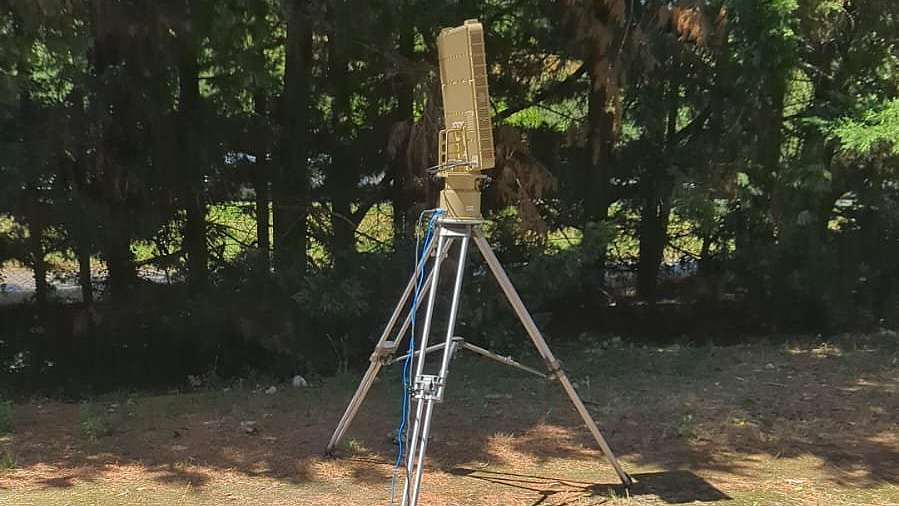
Game changer. This is going to save me so much on my monthly radar bills.
My German U-boat neighbors are seething right now.
Commercial radar companies HATE this one simple trick.
The sonar git is still private.
There are companies that offer RaaS, basically radar rentals.
Source: my company had a customer who rented a weather radar for a year to do a study on weather patterns in South America
Woah can anyone rent a weather radar? I’ve got a weather station but it’s not the same
Did y’all not see Twisters?
You’re lucky to have that. My radar has ads.
“You’ve reached your monthly tracking limit. To track additional targets, please upgrade to the Defense+ plan.”
This is the real way to hurt a company. Once an open source version exists, even if it is not as good as the commercial offering, they will have trouble convincing people to pay for what they are selling.
Of course, they should be compensated for their work, but if you can build it yourself then the cost to a company does not need to be much higher than the costs of parts and labor for someone else to do it for you.
One of the things I want to do is build decent applications and release them for free so people can get the same functionality of their paid apps but not need to pay anything.
Main thing stopping me is time.
Military tech companies will be perfectly fine. They typically have 10+ year contracts, and military equipment has a huge price margin in exchange for being reliable and field-serviceable, and the main disadvantage of DIY radar is reliability (unless you also recruit the guy who built it into the army).
It will probably impact civilian market more, where the same companies will try to sell you an unnecessarily hardened machined aluminium box full of cheap Chinese electronics, camo painted for an additional ten thousand bucks.
Their next commercial offering might just be cheaper.
Interestingly enough, this project was originally licensed under the MIT license, but Motti was advised that said license does not protect physical hardware, so it changed to the CERN-OHL-PT license. Should you elect to build your own unit, be aware that the frequencies it operates in are almost assuredly highly regulated in your legal jurisdiction.
Also be aware of anti radiation munitions if you decide to operate one of these in a warzone. Radarmen have very short battlefield lifetimes because turning on a radar without lots of electronic countermeasures (hell even with countermeasures) is basically like turning on a spotlight that says “blow me up”.
So, one of the really interesting things to me about this approach is that it offers the same asymmetric value proposition that cheap attack drones do to modern pre-drone IADS.
That is: this is a platform that costs 10-15k, and an AGM-88 of modern manufacture costs almost 900k, and a Kh-31 costs about 550k - and, just as importantly, both require a long time to manufacture. So, you could theoretically make a moderately large distributed array sprinkled over a few square kilometers, and even if they’re ALL turned on, it quickly becomes logistically infeasible to knock them all out without spending a silly quantity on antirad munitions, as well as massively attriting your stocks of antirad munitions. And if you turn like 10-25% of them on at a time and cycle through your array, the problem becomes even harder for the attacker. And if you have some sort of process or mechanism - like, oh I don’t know, figuring out how to do light aerial transport with cargo drones, or even figuring out how to mount these distributed array nodes on the drones themselves, and some sort of lightweight tether for providing power - the problem becomes a MASSIVE pain in the ass for an adversary (especially that last idea, which introduces z-axis and immediate maneuverability, such that the array could feasibly detect and altogether avoid an incoming antirad munition).
And that’s the paradigm of modern warfare - not just drones, but also networked and attritable systems that maintain functionality when elements are taken offline
adding to this. I imagine that the emitter by itself costs a fraction, so set-up a huge array of these dumb emitters, and a few active systems randomly within that array. You’d essentially create an interdiction zone.
Prices for electronics are exceedingly floaty in these ship-shinking days
I don’t always make typos but when I do I sound like Sean Connery.
Ukraine: “Write that down! WRITE THAT DOWN!”
This doesn’t have any practical application in Ukraine.
Ukraine detects FPV drones with numerous distributed and networked microphone/acoustic sensors. You’re not going to get any cheaper than a used phone paired with a $2 USB solar panel.
The larger Shahed/Geran and above stuff isn’t limited by radar detection. What they need are cheap interceptors to deal with swarm attacks.
If you crack the combination of “actually cheap” and “reliable interceptor”, the US military industrial complex is going to build you your very own Scrooge vault.
And then defense contractors will sell it to the government for a 10,000% markup.
But in all reality they would steal it after the inventor commits suicide with 2 rounds to the back of the head