

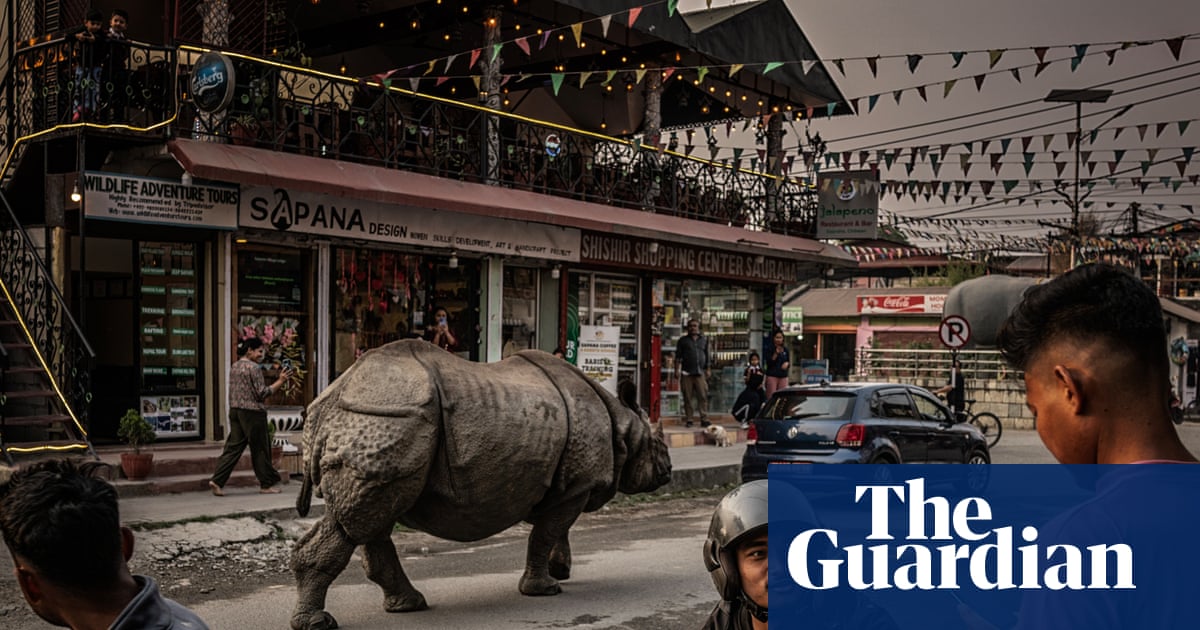
The tourists lining the steep embankment buzzed with excitement, phones out, snapping away in the twilight as a wild Indian rhinoceros grazed below the Nepali village of Sauraha. Climbing to the main street, the rhino ambled down the middle of the road.
Local people warned tourists to give it plenty of space. All manner of wheeled vehicles slowed, then passed. The rhino turned its horn at a cyclist passing too close, triggering gasps from the assembled crowd.
Night had fallen by the time it reached the local hotel. The rhino, illuminated by headlights, turned to enter the grounds. The hotel manager stationed himself in the parking lot and shone a strobe torch in the rhino’s eyes.
Pausing momentarily, it turned, as the manager had hoped, on to the footpath through the garden, disappearing into the darkness behind the hotel.
The close encounter ended without incident, but as Nepal navigates more and more incidents of human-wildlife conflict, it is learning how to educate those most at risk.