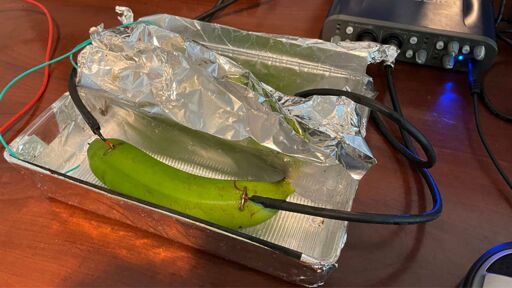
I’m lightly active in the headphone enthusiast space. Even in the more light-hearted circles there is still an elevated amount of placebo bullshit and stubborn belief in things that verifiably make zero difference.
It’s rather fascinating in a way. I’ve been in and out of various hobbies over the course of my life but there is just something about audio that attracts an atmosphere of wilful ignorance and bad actors that prey on it.
I’ve been in the audio enthusiast community for like 17 years now. When I was fresh, the internet commentators had me thinking there was some audio heaven in the high end compared to the mid range priced gear. Now I know better and the gear community is not so high end price evangelicals like it used to be. I feel like there was a before and after the $30 Monoprice DJ headphones and the wave of headphones since. Then especially IEMs. Once ChiFi really got rolling with IEMs and amplifiers and DACs, $1000+ snake oil salespeople got to deal in a way more competitive market
Same with speakers. Internet changed everything. No more at the whim of specialty audio stores stock and Best Buys. Now you got the whole worlds amount of speaker brands at a click of a finger plus craigslist/offerup. Also again ChiFi amplifiers and DACs. Also improvements in audio codecs whether for wireless or not. Bluetooth audio was awful until it stopped being awful as standards improved
These days I mostly see the placebo audio arguments in streaming service and FLAC/lossless encode fanboys. Headphone and speaker communities these days seem a lot more self aware and steeped in self-deprecating humor over the cost, diminishing returns, placebo, snake oil they live in today compared to 17 years ago. I want my digital audio cables endpoints plated with the highest quality diamonds to preserve the zeros and ones. No lab diamonds. Must be natural providing the warmth only blood diamonds that excel in removing negative ions. I treat my room with the finest pink himalayan salt sound absorbent wall panels to deal with the most problematic materials used by homebuilders. Authentic himalayan salt has been shown to be some of the highest quality material in filtering unwanted noise and echos while leaving clean pure audio bliss
These days I mostly see the placebo audio arguments in streaming service and FLAC/lossless encode fanboys.
The clamour for lossless/high-res streaming is the audiophile community in a nutshell. Literally paying more money so your brain can trick you into thinking it sounds better.
Like many hobbies, it’s mainly a way to rationalize spending ever increasing amounts on new equipment and source content. I was into the whole scene for a while, but once I had discovered what components in the audio chain actually improve sound quality and which don’t, I called it quits.
The push for lossless seems more like pushback on low bit rate and reduced dynamic range by avoiding compression altogether. Not really a snob thing as much as trying to avoid a common issue.
The video version is getting the Blu-ray which is significantly better than streaming in specific scenes. For example every scene that I have seen with confetti on any streaming service is an eldritch horror of artifacts, but fine on physical media, because the streaming compression just can’t handle that kind of fast changing detail.
It does depend on the music or video though, the vast majority are fine with compression.
[deleted]
This is a really old test. There are forum posts of the same concept and some news articles with the test that are so old that they 404 now. An unshielded coat hanger is the most common. And yes, this is done frequently with analog signals. No, you can’t tell the difference.
[deleted]
Fun fact: this is where the “banana connector” came from. Before copper was discovered, early humans used bananas for all their audio connections. The name stuck, even though wires are made of metal today.
Behold:
5.4 Electrical Conductivity Measurement This method includes electrical impedance spectroscopy (EIS) and dielectric analysis (DEA). The physical state of a material is measured as a function of frequency in EIS and the frequency ranges from 100 Hz - 10 MHz. It is simple and easier technique used to estimate the physiological status of various biological tissues49-52. Experimental frequency response of impedance is characterised by electrical equivalent circuits of materials. The physical properties of materials can be quantified by monitoring the changes in parameters at the equivalent circuit, among various equivalent models proposed53-54. DEA measurement is used in high frequency areas, generally 100 MHz - 10 GHz. DEA is used in moisture estimation and bulk density determination

So a overripe banana is an interesting high-pass filter, kinda like a capacitor, though the big takeaway is the conductance vs ripeness.
So if you want to test if a banana is ready to eat, hook it up… preferably with several other bananas in series. If the music is too loud, they are ready. Too quiet, and it’s not time yet.
Good cables are shielded well. That she makes them expensive. That’s not transmission, that’s shielding. I don’t think they tested that but for digital audio is not surprising