99% of Linux distros behave the same for the most part. There are outliers, like immutables, or NixOS, but whether you’re using Ubuntu, PopOS, Kubuntu, or Mint, your experience with the “linuxness” of your OS will be mostly identical. I’m not talking about things like “the DE looks different”, or the overall “look and feel”, I’m talking about software compatibility, driver compatibility, etc.
You could, I guess, argue if they should say “we’re testing a Debian based distro” instead of “Linux”, but that’s about it.
As already mentioned, Ubuntu/PopOS/Kubuntu/Mint are maybe the four most identical distros in the entire ecosystem. But your point really does hold true even with less-identical distros.
Currently, I have an Ubuntu Server, an Arch PC, and an old laptop “test machine” running Fedora. These are totally different limbs of the Linux family tree, but things pretty much work the same in all of them. The main difference is the package manager: Apt vs Pacman vs DNF. But like, they’re all doing basically the same thing under the hood: checking your installed software against some repository to see if anything needs an update. The actual workflow is pretty much the same with any of them.
After that it’s pretty much just a question of downloading the desktop environment and software you like. Or finding a distro that comes pre-installed with what you want. To make a gaming analogy: linux distros are like Dark Souls classes: starting stats and equipment, but the starting point doesn’t lock you into your you build in the future.


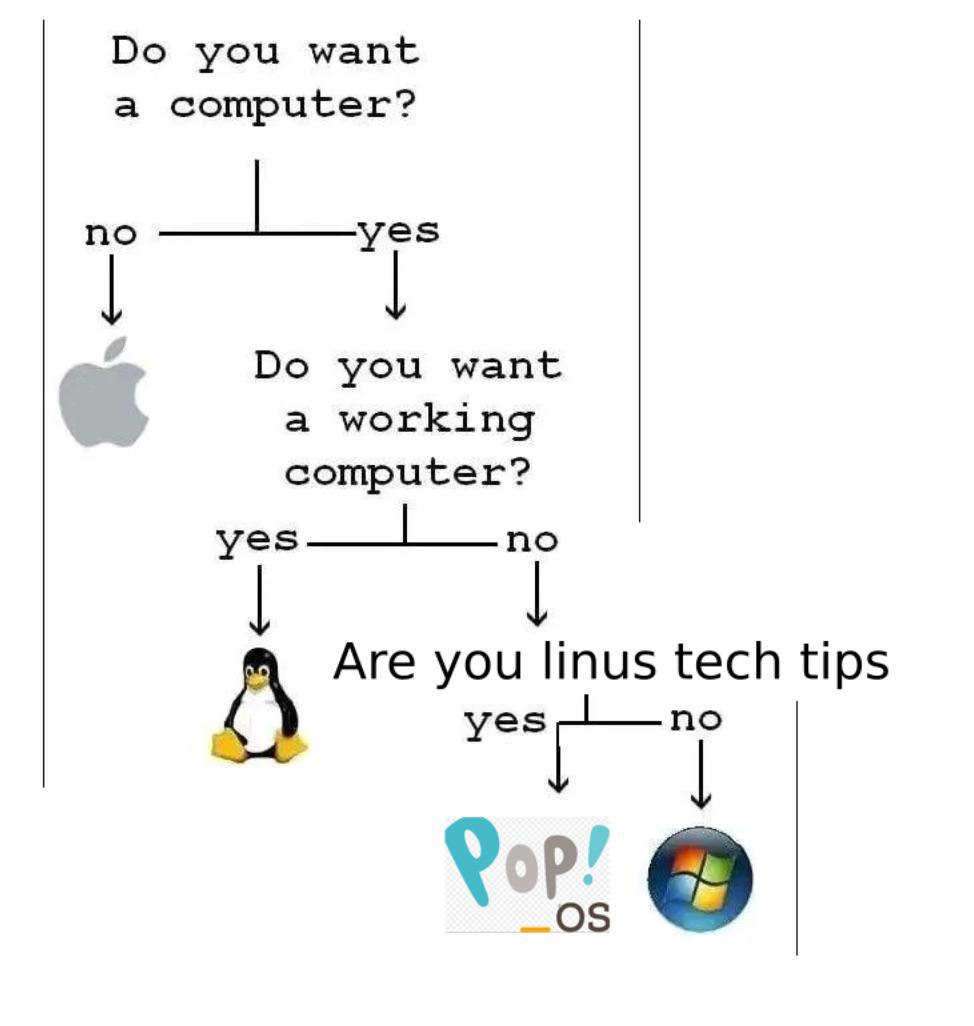
This is an extremely bad take.
99% of Linux distros behave the same for the most part. There are outliers, like immutables, or NixOS, but whether you’re using Ubuntu, PopOS, Kubuntu, or Mint, your experience with the “linuxness” of your OS will be mostly identical. I’m not talking about things like “the DE looks different”, or the overall “look and feel”, I’m talking about software compatibility, driver compatibility, etc.
You could, I guess, argue if they should say “we’re testing a Debian based distro” instead of “Linux”, but that’s about it.
As already mentioned, Ubuntu/PopOS/Kubuntu/Mint are maybe the four most identical distros in the entire ecosystem. But your point really does hold true even with less-identical distros.
Currently, I have an Ubuntu Server, an Arch PC, and an old laptop “test machine” running Fedora. These are totally different limbs of the Linux family tree, but things pretty much work the same in all of them. The main difference is the package manager: Apt vs Pacman vs DNF. But like, they’re all doing basically the same thing under the hood: checking your installed software against some repository to see if anything needs an update. The actual workflow is pretty much the same with any of them.
After that it’s pretty much just a question of downloading the desktop environment and software you like. Or finding a distro that comes pre-installed with what you want. To make a gaming analogy: linux distros are like Dark Souls classes: starting stats and equipment, but the starting point doesn’t lock you into your you build in the future.
NixOS is a different beast for sure.