

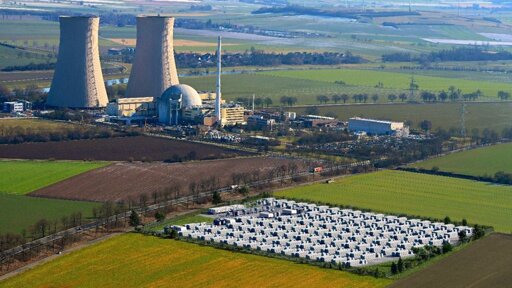
In 2021, the Grohnde nuclear power plant in Lower Saxony on the Weser River was shut down. Now, immediately next to it, the Emmerthal energy cluster is growing with three very large battery storage systems, ground-mounted photovoltaic systems, and a new substation for several 380-kilovolt high-voltage lines.
I get what you are saying, but there are some subtleties that make it seem a bit out or context.
Battery storage plants and power plants do not serve the same purpose. One is to generate electricity, the other is used to buffer and stabilize the net. They have to be used together.
Solar and wind are cheaper to build/run and also way more decentralized than a nuclear plant. Plus a nuclear power plant takes 1-2 decades to complete and should therefore be seen as a long term benefit, it’s not a solution for the short term electricity problems Europe is facing.
Nuclear hasn’t recently become unpopular in Germany. It was unpopular in the '80s and '90s, particularity after the Chernobyl accident. The decision to phase out nuclear was taken around the turn of the century. That’s 25 years ago. Nowadays people have a more positive outlook on nuclear but it still has to make sense from an economic point of view before companies want to invest.
And yet, they closed one down.
As long as you don’t mind occasionally not having power during winter nights. You need an insane overcapacity in both prodiction and storage if you want to get rid of all baseload generation. It’ll take decades to build, we don’t have that yet. Shutting down plants now is very premature.
This plant was literally already there. Not shutting it down took zero construction years.
I’m also not saying “don’t build solar”, I’m saying "shut down browncoal rooftop mining, keep nuclear open.
This is pretty much what the German government did. Which the exception of afaik two plants which were near their design lifespan, all the others were scheduled for decomissioning because of being over their intended lifespan already.
These were really old plants based on outdated designs, being both increasingly insecure and uneconomic due to their age.
The operators themselves were in favour of shutting them down.
True, because unlike the brown coal plants, who could just pump CO2 and particulate into the air without problem, the nuclear plants actually had to pay for the full lifecycle. Fossil plants don’t have to. Hell, they windmills don’t have to pay for decommissioning in advance, despite the low cost of that.
That’s rather unfair. It’s like saying the had to throw away my car because the tires were worn out. They could have been overhauled and stayed in use.
Somewhat in agreement with the first point, but not at all with the second. Most of these nuclear power plants are half a century old and had been overhauled already to the very limit of what was economically feasible. Continued operation would have meant building new reactor blocks next to them and decomissioning the existing ones.
Half a century is barely getting on in nuclear power terms… Were German plants especially poorly built?
Do Germans actually care about reactor safty instead of burying their head in the sand like other nations with super old nuclear power plants like to do?